Zombie UV™ Fixable Viability Kit Zombie UV™ Fixable Viability Kit

Pricing & Availability
Regulatory Status
RUO
Other Names
Fixable Dye, Fixable Viability Dye, Dead, Apoptosis
Ave. Rating
Submit a Review
Product Citations
publications
Zombie_UV_Viability_Dye_012714
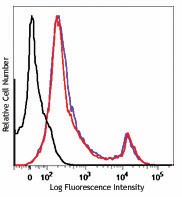
One day old C57BL/6 mouse splenocytes were stained with Zombie UV™ and analyzed before fixation (purple) or after fixation and permeabilization (red). Cells alone, without Zombie UV™ staining, are indicated in black.
  • Zombie_UV_Viability_Dye_012714
    One day old C57BL/6 mouse splenocytes were stained with Zombie UV™ and analyzed before fixation (purple) or after fixation and permeabilization (red). Cells alone, without Zombie UV™ staining, are indicated in black.
See Zombie UV™ spectral data
Cat # Size Price Quantity Check Availability Save
423107 100 tests NOK735
Check Availability


Need larger quantities of this item?
Request Bulk Quote
423108 500 tests NOK2764
Check Availability


Need larger quantities of this item?
Request Bulk Quote
Description

Zombie UV™ is an amine reactive fluorescent dye that is non-permeant to live cells, but permeant to the cells with compromised membranes. Thus, it can be used to assess live vs. dead status of mammalian cells. Zombie UV™ is a polar water soluble dye, providing violet fluorescence, making it suitable for multi-color detection.

Product Details
Technical Data Sheet (pdf)

Product Details

Preparation
Zombie UV™ Fixable Viability kit is composed of lyophilized Zombie UV™ dye and anhydrous DMSO. For reconstitution, bring the kit to room temperature; add 100 µl of DMSO to one vial of Zombie UV™ dye until fully dissolved. 100 tests = 1 vial of Zombie UV™ + DMSO, 500 tests = 5 vials of Zombie UV™ + DMSO.
Storage & Handling
Store kit at -20°C upon receipt. Do not open vials until needed. Once the DMSO is added to the Zombie UV™ dye, use immediately, or store at -20°C in a dry place and protected from light, preferably in a desiccator or in a container with desiccant for no more than one month.
Application

FC - Quality tested

Recommended Usage

Each lot of this product is quality control tested by immunofluorescent staining with flow cytometric analysis.

For flow cytometry, the suggested dilution is 1:100-1:1000 for 1-10 million cells. It is recommended that the reagent be titrated for optimal performance for each application, as optimal dosage varies with cell type.

Excitation Laser
Ultraviolet Laser (355 nm)
Application Notes

Zombie UV™ dye is excited by the UV laser (355 nm) and has fluorescence emission maximum at 459 nm. If using in a multi-color panel design, filter optimization may be required depending on other fluorophores used. Zombie UV™ dye has similar emission to DAPI.

Standard Cell Staining Protocol:

  1. Prior to reconstitution, spin down the vial of lyophilized reagent in a microcentrifuge to ensure the reagent is at the bottom of the vial.
  2. For reconstitution, pre-warm the kit to room temperature; add 100 µL of DMSO to one vial of Zombie UV™ dye and mix until fully dissolved
  3. Wash cells with PBS buffer (no Tris buffer and protein free).
  4. Dilute Zombie UV™ dye at 1:100-1000 in PBS. Resuspend 1-10 x 106 cells in diluted 100 µL Zombie UV™ solution. To minimize background staining of live cells, titrate the amount of dye and/or number of cells per 100 µL for optimal performance. Different cell types can have a wide degree of variability in staining based on cell size and degree of cell death.
    • Note: Don’t use Tris buffer as a diluent and be sure that the PBS does not contain any other protein like BSA or FBS.
    • Note: The amount of dye used can also influence the ability to detect apoptotic as well as live and dead cells.
  5. Incubate the cells at room temperature (or 4°C), in the dark, for 15-30 minutes.
  6. Wash one time with 2 mL BioLegend’s Cell Staining Buffer (Cat. No. 420201) or equivalent buffer containing serum or BSA.
  7. Continue performing antibody staining procedure as desired.
  8. Cells can be fixed with paraformaldehyde or methanol prior to permeabilization or can be analyzed without fixation.

No-wash Sequential Staining Protocol:

  1. Wash cells with PBS buffer (no Tris buffer and protein free).
  2. For reconstitution, pre-warm the kit to room temperature; add 100 µL of DMSO to one vial of Zombie UV™ dye and mix until fully  dissolved
  3. Determine the total µL volume of antibody cocktail previously titrated and optimized for the assay that will be added to each vial/well of cells based on a final volume of 100 µL. Subtract that antibody volume from the 100 µL total staining volume intended for the assay. In the remaining volume, dilute Zombie UV™ dye at 1:100-1000 in PBS as determined by prior optimization at that volume. For example, if you are adding 20 µL of antibody cocktail for a 100 µL total staining volume, use 80 µL of Zombie UV™ solution. Resuspend 1-10 x 106 cells in the appropriate volume of Zombie UV™ solution. Different cell types can have a wide degree of variability in staining based on cell size and degree of cell death.
    • Note: Don’t use Tris buffer as a diluent and be sure that the PBS does not contain any other protein like BSA or FBS.
    • Note: The amount of dye used can also influence the ability to detect apoptotic as well as live and dead cells.
  4. Incubate for 10-15 minutes at RT (or 4°C), protected from light. Without washing the cells, add the cell surface antibody cocktail and incubate for another 15-20 minutes.
  5. Add 1-2 mL Cell Staining Buffer (Cat. No. 420201) or equivalent buffer containing BSA or serum. Centrifuge to pellet.
  6. Continue with normal fixation and permeabilization procedure. If planning to skip fixation and analyze cells live, complete an additional wash step to minimize any unnecessary background of the live cells.
    • Notes: If the cell type in use cannot tolerate a protein-free environment, then titrate the Zombie UV™ dye in the presence of the same amount of BSA/serum as will be present in the antibody staining procedure. A higher amount of Zombie UV™ may be required since the BSA/serum will react with and bind up some proportion of the Zombie UV™.
Application References
  1. Souza-Fonesca-Guimaraes F, et al. 2015. PNAS. 112:2376. PubMed
Product Citations
  1. Argüello RJ, et al. 2020. Cell Metab. 32:1063. PubMed
  2. Souza-Fonseca-Guimaraes F, et al. 2016. Cell Death Dis. 7:e2302. PubMed
  3. Duraiswamy J, et al. 2021. Cancer Cell. 39:1623. PubMed
  4. Klapholz M, et al. 2022. J Pathol. 257:186. PubMed
  5. Alam A, et al. 2022. Cancer Cell. 40:153. PubMed
  6. Huang SSY, et al. 2022. J Cell Mol Med. 26:1714. PubMed
  7. Atalis A, et al. 2022. J Control Release. 347:476. PubMed
  8. Xu C, et al. 2022. iScience. 25:105123. PubMed
  9. Weng S, et al. 2022. Front Immunol. 13:1025931. PubMed
  10. Tatsumi N, et al. 2022. STAR Protoc. 3:101845. PubMed
  11. Giannou AD, et al. 2023. Immunity. 56:125. PubMed
  12. Mallick S, et al. 2023. Transl Res. :. PubMed
  13. Arimoto KI, et al. 2023. Nat Commun. 14:251. PubMed
  14. Smith LA, et al. 2023. Front Oncol. 12:1031174. PubMed
  15. Denis M, et al. 2023. Front Immunol. 13:1011943. PubMed
  16. Labuz DR, et al. 2023. Elife. 12: . PubMed
  17. Shen JZ, et al. 2022. Mol Cell. 82:1123. PubMed
  18. Zhang H, et al. 2022. J Exp Med. 219:. PubMed
  19. Arruda DC, et al. 2022. J Control Release. 350:228. PubMed
  20. Michaels YS, et al. 2022. Sci Adv. 8:eabn5522. PubMed
  21. Lutz EA, et al. 2022. Proc Natl Acad Sci U S A. 119:e2205983119. PubMed
  22. Bonadonna M, et al. 2022. Sci Adv. 8:eabq4469. PubMed
  23. Humphries DC, et al. 2023. Front Immunol. 14:1100161. PubMed
  24. Heng Y, et al. 2023. J Transl Med. 21:167. PubMed
  25. Yi X, et al. 2023. Signal Transduct Target Ther. 8:107. PubMed
  26. Gu XW, et al. 2023. Nat Commun. 14:1439. PubMed
  27. Arunachalam PS, et al. 2023. J Clin Invest. 133:. PubMed
  28. Hackerova L, et al. 2023. Front Vet Sci. 10:1116891. PubMed
  29. Kak G, et al. 2023. J Neuroinflammation. 20:114. PubMed
  30. Lin W, et al. 2023. Commun Biol. 6:447. PubMed
  31. Borbet TC, et al. 2023. iScience. 26:106810. PubMed
  32. Wang X, et al. 2023. Stem Cell Rev Rep. . PubMed
  33. Reyes RA, et al. 2021. PLoS One. 16:e0261656. PubMed
  34. Rosina M, et al. 2022. Cell Metab. 34:533. PubMed
  35. Tocheva AS, et al. 2020. Curr Protoc Immunol. 130:e103. PubMed
  36. Zgair A, et al. 2017. Sci Rep. . 10.1038/s41598-017-15026-z. PubMed
  37. Xu H, et al. 2017. EBioMedicine. 10.1016/j.ebiom.2017.03.003. PubMed
  38. Lu C, et al. 2019. Cancer Immunol Res. 7:414. PubMed
  39. Vaughan HJ, et al. 2021. Mol Ther Oncolytics. 21:377. PubMed
  40. Matsui K, et al. 2015. PLoS One. 10: 0137195. PubMed
  41. Clarke F,et al. 2017. PLoS One. 10.1371/journal.pone.0186625. PubMed
  42. Gruber T, et al. 2020. JCI Insight. 5:00. PubMed
  43. Trimaglio G, et al. 2020. Oncoimmunology. 9:1790125. PubMed
  44. Rao S, et al. 2017. Cell. 168(3):503-516.e12. PubMed
  45. Godbersen-Palmer C, et al. 2020. J Immunol. 204:2973. PubMed
  46. Souza-Fonseca-Guimaraes F, et al. 2015. Proc Natl Acad Sci U S A. 112:2376. PubMed
  47. Chaurasiya S, et al. 2020. Oncoimmunology. 9:1729300. PubMed
  48. Rafiq S, et al. 2018. Nat Biotechnol. 36:847. PubMed
  49. Liu Y, et al. 2022. Nat Commun. 13:2665. PubMed
  50. Poggio M, et al. 2019. Cell. 177:414. PubMed
  51. Sellau J, et al. 2020. Nat Commun. 2.860416667. PubMed
  52. Odeh-Couvertier VY, et al. 2022. Bioeng Transl Med. 7:e10282. PubMed
  53. Vanshylla K, et al. 2022. Cell Host Microbe. 30:69. PubMed
  54. Guo W, et al. 2022. J Immunother Cancer. 10:. PubMed
  55. Leigh N, et al. 2017. The Journal of Immunology. 10.4049/jimmunol.1502181. PubMed
  56. An J,et al. 2017. Sci Rep.. 10.1038/s41598-017-13629-0. PubMed
  57. Reighard SD, et al. 2020. Cell Rep Med. :1. PubMed
  58. Lin J, et al. 2017. Sci Rep. 7:41722. PubMed
  59. Lord JD, et al. 2018. Clin Immunol. 193:24:00. PubMed
  60. Nath PR, et al. 2019. Cancer Immunol Res. 7:1547. PubMed
  61. Fallet B, et al. 2020. Cell Rep. 30:1013. PubMed
  62. Zhang X, et al. 2022. Cell Rep. 40:111203. PubMed
  63. Littwitz-Salomon E, Schimmer S, and Dittmer U. 2017. J Virol. 10.1128/JVI.01122-17. PubMed
  64. Trüb M, et al. 2020. J Immunother Cancer. 8:00. PubMed
  65. Shiao SL, et al. 2021. Cancer Cell. 39:1202. PubMed
  66. Lerrer S, et al. 2021. iScience. 24:103020. PubMed
  67. Grigoryan L, et al. 2022. NPJ Vaccines. 7:55. PubMed
  68. Gehling K, et al. 2022. Life Sci Alliance. 5:. PubMed
  69. Nath PR, et al. 2022. Oncoimmunology. 11:2111909. PubMed
  70. Kallert S, et al. 2017. Nature Communications. 10.1038/ncomms15327. PubMed
  71. Moreno-Fernandez ME, et al. 2018. JCI Insight. 3. PubMed
  72. Li D, et al. 2019. J Lipid Res. 60:1503. PubMed
  73. Kalbasi A, et al. 2020. Sci Transl Med. :12. PubMed
  74. Huang SSY, et al. 2021. Biology. 10(8):. PubMed
  75. Truong AS, et al. 2021. J Clin Invest. 131:. PubMed
  76. Zeng Y, et al. 2019. Oncotarget. 10:4479. PubMed
  77. Fredriksson-Lidman K, et al. 2017. PLoS One. 10.1371/journal.pone.0185509. PubMed
  78. Holokai L, et al. 2020. Cancers (Basel). 12:00. PubMed
  79. Burns JC, et al. 2020. eLife. 9:00. PubMed
  80. Harder I, et al. 2022. Cells. 11:. PubMed
  81. McVey JC, et al. 2022. iScience. 25:103847. PubMed
  82. O’Neill R, et al. 2017. J Immunol. 10.4049/jimmunol.1700380. PubMed
  83. Ganguly S, et al. 2021. Cell Mol Gastroenterol Hepatol. 12:891. PubMed
  84. Henrich IC, et al. 2021. Cancer Res. 81:2171. PubMed
  85. Johnston S, et al. 2021. Elife. 10: . PubMed
  86. Den Braanker H, et al. 2021. Front Immunol. 12:768113. PubMed
  87. Smith CA, et al. 2019. JCI Insight. 4. PubMed
  88. Pasciuto E, et al. 2020. Cell. 182:625. PubMed
  89. Zhang R, et al. 2022. Front Pharmacol. 13:870848. PubMed
  90. Graciotti M, et al. 2020. Vaccines (Basel). 8:00. PubMed
  91. Capuccini B, et al. 2016. Sci Rep. 6:39258. PubMed
  92. Dangaj D, et al. 2019. Cancer Cell. 35:885. PubMed
  93. Cartwright ANR, et al. 2021. Cancer Immunol Res. 9:470. PubMed
  94. Lyle C, et al. 2019. Sci Rep. 9:20257. PubMed
  95. Moreno-Fernandez ME, et al. 2021. STAR Protoc. 2:100937. PubMed
  96. Wu J, et al. 2021. STAR Protoc. 2:101022. PubMed
  97. Georg P, et al. 2022. Cell. 185:493. PubMed
  98. Ireland RE, et al. 2022. Viruses. 14:. PubMed
  99. Comte D, et al. 2016. Proc Natl Acad Sci U S A. 113: 9321 - 9326. PubMed
  100. Reuschl AK, et al. 2022. Cell Rep. 39:110650. PubMed
  101. Cantor DJ et al. 2019. Cell reports. 26(1):108-118 . PubMed
  102. Salehi S, et al. 2017. PLoS One. 10.1371/journal.pone.0163614. PubMed
  103. Mempin M, et al. 2021. Cancers (Basel). 13:. PubMed
  104. Wimmers F, et al. 2021. Cell. 184:3915. PubMed
  105. Galván-Peña S, et al. 2021. Proc Natl Acad Sci U S A. 118:. PubMed
  106. Nath PR, et al. 2019. Front Immunol. 9:2985. PubMed
  107. Bommareddy PK, et al. 2019. J Biol Methods. 6:2. PubMed
  108. Prosser A, et al. 2021. STAR Protoc. 2:100810. PubMed
  109. Chen YL, et al. 2022. Front Neurosci. 16:876582. PubMed
  110. Giles D, et al. 2016. PLoS One. 11: 0149783. PubMed
  111. Lacar B, et al. 2016. Nat Commun. 7: 11022. PubMed
  112. Gardner A, et al. 2022. J Immunother Cancer. 10:. PubMed
  113. Lee A, et al. 2022. Nat Commun. 13:549. PubMed
  114. Grabiec A, et al. 2017. J Allergy Clin Immunol. 10.1016/j.jaci.2017.03.024. PubMed
  115. Li CY, et al. 2022. Int J Mol Sci. 23:. PubMed
  116. Zhong W, et al. 2022. Front Immunol. 13:1001255. PubMed
  117. Zeng Y, et al. 2019. FASEB J. 33:6596. PubMed
  118. Gamradt S, et al. 2021. iScience. 24:103312. PubMed
  119. Mitchell LA, et al. 2019. Oncotarget. 10:2252. PubMed
  120. Argüello RJ, et al. 2020. Cell Metab. 32:1063. PubMed
  121. Souza-Fonseca-Guimaraes F, et al. 2016. Cell Death Dis. 7:e2302. PubMed
  122. Duraiswamy J, et al. 2021. Cancer Cell. 39:1623. PubMed
  123. Klapholz M, et al. 2022. J Pathol. 257:186. PubMed
  124. Alam A, et al. 2022. Cancer Cell. 40:153. PubMed
  125. Huang SSY, et al. 2022. J Cell Mol Med. 26:1714. PubMed
  126. Atalis A, et al. 2022. J Control Release. 347:476. PubMed
  127. Xu C, et al. 2022. iScience. 25:105123. PubMed
  128. Weng S, et al. 2022. Front Immunol. 13:1025931. PubMed
  129. Tatsumi N, et al. 2022. STAR Protoc. 3:101845. PubMed
  130. Giannou AD, et al. 2023. Immunity. 56:125. PubMed
  131. Mallick S, et al. 2023. Transl Res. :. PubMed
  132. Arimoto KI, et al. 2023. Nat Commun. 14:251. PubMed
  133. Smith LA, et al. 2023. Front Oncol. 12:1031174. PubMed
  134. Denis M, et al. 2023. Front Immunol. 13:1011943. PubMed
  135. Labuz DR, et al. 2023. Elife. 12: . PubMed
  136. Shen JZ, et al. 2022. Mol Cell. 82:1123. PubMed
  137. Zhang H, et al. 2022. J Exp Med. 219:. PubMed
  138. Arruda DC, et al. 2022. J Control Release. 350:228. PubMed
  139. Michaels YS, et al. 2022. Sci Adv. 8:eabn5522. PubMed
  140. Lutz EA, et al. 2022. Proc Natl Acad Sci U S A. 119:e2205983119. PubMed
  141. Bonadonna M, et al. 2022. Sci Adv. 8:eabq4469. PubMed
  142. Humphries DC, et al. 2023. Front Immunol. 14:1100161. PubMed
  143. Heng Y, et al. 2023. J Transl Med. 21:167. PubMed
  144. Yi X, et al. 2023. Signal Transduct Target Ther. 8:107. PubMed
  145. Gu XW, et al. 2023. Nat Commun. 14:1439. PubMed
  146. Arunachalam PS, et al. 2023. J Clin Invest. 133:. PubMed
  147. Hackerova L, et al. 2023. Front Vet Sci. 10:1116891. PubMed
  148. Kak G, et al. 2023. J Neuroinflammation. 20:114. PubMed
  149. Lin W, et al. 2023. Commun Biol. 6:447. PubMed
  150. Borbet TC, et al. 2023. iScience. 26:106810. PubMed
  151. Wang X, et al. 2023. Stem Cell Rev Rep. . PubMed
  152. Reyes RA, et al. 2021. PLoS One. 16:e0261656. PubMed
  153. Rosina M, et al. 2022. Cell Metab. 34:533. PubMed
  154. Tocheva AS, et al. 2020. Curr Protoc Immunol. 130:e103. PubMed
  155. Zgair A, et al. 2017. Sci Rep. . 10.1038/s41598-017-15026-z. PubMed
  156. Xu H, et al. 2017. EBioMedicine. 10.1016/j.ebiom.2017.03.003. PubMed
  157. Lu C, et al. 2019. Cancer Immunol Res. 7:414. PubMed
  158. Vaughan HJ, et al. 2021. Mol Ther Oncolytics. 21:377. PubMed
  159. Matsui K, et al. 2015. PLoS One. 10: 0137195. PubMed
  160. Clarke F,et al. 2017. PLoS One. 10.1371/journal.pone.0186625. PubMed
  161. Gruber T, et al. 2020. JCI Insight. 5:00. PubMed
  162. Trimaglio G, et al. 2020. Oncoimmunology. 9:1790125. PubMed
  163. Rao S, et al. 2017. Cell. 168(3):503-516.e12. PubMed
  164. Godbersen-Palmer C, et al. 2020. J Immunol. 204:2973. PubMed
  165. Souza-Fonseca-Guimaraes F, et al. 2015. Proc Natl Acad Sci U S A. 112:2376. PubMed
  166. Chaurasiya S, et al. 2020. Oncoimmunology. 9:1729300. PubMed
  167. Rafiq S, et al. 2018. Nat Biotechnol. 36:847. PubMed
  168. Liu Y, et al. 2022. Nat Commun. 13:2665. PubMed
  169. Poggio M, et al. 2019. Cell. 177:414. PubMed
  170. Sellau J, et al. 2020. Nat Commun. 2.860416667. PubMed
  171. Odeh-Couvertier VY, et al. 2022. Bioeng Transl Med. 7:e10282. PubMed
  172. Vanshylla K, et al. 2022. Cell Host Microbe. 30:69. PubMed
  173. Guo W, et al. 2022. J Immunother Cancer. 10:. PubMed
  174. Leigh N, et al. 2017. The Journal of Immunology. 10.4049/jimmunol.1502181. PubMed
  175. An J,et al. 2017. Sci Rep.. 10.1038/s41598-017-13629-0. PubMed
  176. Reighard SD, et al. 2020. Cell Rep Med. :1. PubMed
  177. Lin J, et al. 2017. Sci Rep. 7:41722. PubMed
  178. Lord JD, et al. 2018. Clin Immunol. 193:24:00. PubMed
  179. Nath PR, et al. 2019. Cancer Immunol Res. 7:1547. PubMed
  180. Fallet B, et al. 2020. Cell Rep. 30:1013. PubMed
  181. Zhang X, et al. 2022. Cell Rep. 40:111203. PubMed
  182. Littwitz-Salomon E, Schimmer S, and Dittmer U. 2017. J Virol. 10.1128/JVI.01122-17. PubMed
  183. Trüb M, et al. 2020. J Immunother Cancer. 8:00. PubMed
  184. Shiao SL, et al. 2021. Cancer Cell. 39:1202. PubMed
  185. Lerrer S, et al. 2021. iScience. 24:103020. PubMed
  186. Grigoryan L, et al. 2022. NPJ Vaccines. 7:55. PubMed
  187. Gehling K, et al. 2022. Life Sci Alliance. 5:. PubMed
  188. Nath PR, et al. 2022. Oncoimmunology. 11:2111909. PubMed
  189. Kallert S, et al. 2017. Nature Communications. 10.1038/ncomms15327. PubMed
  190. Moreno-Fernandez ME, et al. 2018. JCI Insight. 3. PubMed
  191. Li D, et al. 2019. J Lipid Res. 60:1503. PubMed
  192. Kalbasi A, et al. 2020. Sci Transl Med. :12. PubMed
  193. Huang SSY, et al. 2021. Biology. 10(8):. PubMed
  194. Truong AS, et al. 2021. J Clin Invest. 131:. PubMed
  195. Zeng Y, et al. 2019. Oncotarget. 10:4479. PubMed
  196. Fredriksson-Lidman K, et al. 2017. PLoS One. 10.1371/journal.pone.0185509. PubMed
  197. Holokai L, et al. 2020. Cancers (Basel). 12:00. PubMed
  198. Burns JC, et al. 2020. eLife. 9:00. PubMed
  199. Harder I, et al. 2022. Cells. 11:. PubMed
  200. McVey JC, et al. 2022. iScience. 25:103847. PubMed
  201. O’Neill R, et al. 2017. J Immunol. 10.4049/jimmunol.1700380. PubMed
  202. Ganguly S, et al. 2021. Cell Mol Gastroenterol Hepatol. 12:891. PubMed
  203. Henrich IC, et al. 2021. Cancer Res. 81:2171. PubMed
  204. Johnston S, et al. 2021. Elife. 10: . PubMed
  205. Den Braanker H, et al. 2021. Front Immunol. 12:768113. PubMed
  206. Smith CA, et al. 2019. JCI Insight. 4. PubMed
  207. Pasciuto E, et al. 2020. Cell. 182:625. PubMed
  208. Zhang R, et al. 2022. Front Pharmacol. 13:870848. PubMed
  209. Graciotti M, et al. 2020. Vaccines (Basel). 8:00. PubMed
  210. Capuccini B, et al. 2016. Sci Rep. 6:39258. PubMed
  211. Dangaj D, et al. 2019. Cancer Cell. 35:885. PubMed
  212. Cartwright ANR, et al. 2021. Cancer Immunol Res. 9:470. PubMed
  213. Lyle C, et al. 2019. Sci Rep. 9:20257. PubMed
  214. Moreno-Fernandez ME, et al. 2021. STAR Protoc. 2:100937. PubMed
  215. Wu J, et al. 2021. STAR Protoc. 2:101022. PubMed
  216. Georg P, et al. 2022. Cell. 185:493. PubMed
  217. Ireland RE, et al. 2022. Viruses. 14:. PubMed
  218. Comte D, et al. 2016. Proc Natl Acad Sci U S A. 113: 9321 - 9326. PubMed
  219. Reuschl AK, et al. 2022. Cell Rep. 39:110650. PubMed
  220. Cantor DJ et al. 2019. Cell reports. 26(1):108-118 . PubMed
  221. Salehi S, et al. 2017. PLoS One. 10.1371/journal.pone.0163614. PubMed
  222. Mempin M, et al. 2021. Cancers (Basel). 13:. PubMed
  223. Wimmers F, et al. 2021. Cell. 184:3915. PubMed
  224. Galván-Peña S, et al. 2021. Proc Natl Acad Sci U S A. 118:. PubMed
  225. Nath PR, et al. 2019. Front Immunol. 9:2985. PubMed
  226. Bommareddy PK, et al. 2019. J Biol Methods. 6:2. PubMed
  227. Prosser A, et al. 2021. STAR Protoc. 2:100810. PubMed
  228. Chen YL, et al. 2022. Front Neurosci. 16:876582. PubMed
  229. Giles D, et al. 2016. PLoS One. 11: 0149783. PubMed
  230. Lacar B, et al. 2016. Nat Commun. 7: 11022. PubMed
  231. Gardner A, et al. 2022. J Immunother Cancer. 10:. PubMed
  232. Lee A, et al. 2022. Nat Commun. 13:549. PubMed
  233. Grabiec A, et al. 2017. J Allergy Clin Immunol. 10.1016/j.jaci.2017.03.024. PubMed
  234. Li CY, et al. 2022. Int J Mol Sci. 23:. PubMed
  235. Zhong W, et al. 2022. Front Immunol. 13:1001255. PubMed
  236. Zeng Y, et al. 2019. FASEB J. 33:6596. PubMed
  237. Gamradt S, et al. 2021. iScience. 24:103312. PubMed
  238. Mitchell LA, et al. 2019. Oncotarget. 10:2252. PubMed

Antigen Details

Biology Area
Apoptosis/Tumor Suppressors/Cell Death, Cell Biology, Neuroscience
Gene ID
NA

Related FAQs

I am concerned about the spillover I am observing from the Zombie dye into its neighboring channels.
Rule of thumb with Zombie dyes is to titrate them down as much as possible to fit your application. This should potentially help with spillover. Secondly, Zombie positive events represent dead cells and are typically gated out from analysis.
How does the performance of your Zombie dye compare with competitors?

Zombie dyes have been tested against other leading competitors' fixable viability kits and given comparable results. We also highly recommend that you titrate down the amount of each dye used in order to best match the negative signals of your unstained sample and MFI- (mean fluorescence intensity) stained samples.

Can I use methanol/ethanol for fixation after using a Zombie dye?

Yes, most fixation reagents are fine to be used with Zombie dyes. However, it should be noted that Zombie dyes can still be sensitive to reactive oxygen species. Light exposure or reagents with hydrogen peroxide can lead to free radical formation, affecting fluorescence.

Can Zombie be used to determine bacteria, yeast viability?
We have not tested in house bacterial or yeast viability using Zombie dyes. It is not clear whether the difference between surface and intracellular signals will be significantly different in case of non mammalian cells.
Can I use Zombie with cells suspension containing serum?
Serum is full of proteins which will sequester the dye and thereby reducing its effective concentration. The basic rule of thumb with zombie is to titrate it based on your specific condition. Titration also helps reduce the background and spillover into other channels.
Can I use Zombie dyes for microscopy?

Zombie dyes tested in-house for microscopy applications will display data on the product technical datasheet. It should be noted that Zombie dyes may not work for dead cell discrimination in every microscopy application. Important considerations that may impact analysis are determining the signal level that constitutes a dead cell and identifying the proper plane to observe the dead cells.

Why can't I fix my cells prior to using Zombie dyes?

The fixation process can contort and alter the membrane of cells, effectively rendering them dead. Since the ability of the Zombie dyes to stain dead cells is correlated with cell permeability, your results may no longer be a valid representation of dead versus live cells.

Can I use Zombie dyes to detect apoptotic cells?

Yes, Zombie dyes can be used with apoptosis markers, such as Annexin V or Apotracker™ (shown below), to discriminate live, apoptotic, and dead cells.

One day-old C57BL/6 mouse thymocytes were stained with Apotracker™ Tetra Alexa Fluor® 647 and Zombie™ YG581. Zombie-dim/Apotracker™-positive cells are apoptotic, while double-positive cells are dead. Live cells are negative for both markers.

How should I store Zombie dyes?

Store the Zombie dye kit at -20°C upon receipt. Do not open vials until needed. Once DMSO is added, use immediately or store at -20°C in a dry place and protected from light, preferably in a desiccator or in a container with desiccant for no more than one month.

Go To Top Version: 5    Revision Date: 12.18.2024

For Research Use Only. Not for diagnostic or therapeutic use.


This product is supplied subject to the terms and conditions, including the limited license, located at www.biolegend.com/terms) ("Terms") and may be used only as provided in the Terms. Without limiting the foregoing, BioLegend products may not be used for any Commercial Purpose as defined in the Terms, resold in any form, used in manufacturing, or reverse engineered, sequenced, or otherwise studied or used to learn its design or composition without express written approval of BioLegend. Regardless of the information given in this document, user is solely responsible for determining any license requirements necessary for user’s intended use and assumes all risk and liability arising from use of the product. BioLegend is not responsible for patent infringement or any other risks or liabilities whatsoever resulting from the use of its products.


BioLegend, the BioLegend logo, and all other trademarks are property of BioLegend, Inc. or their respective owners, and all rights are reserved.


8999 BioLegend Way, San Diego, CA 92121 www.biolegend.com
Toll-Free Phone: 1-877-Bio-Legend (246-5343) Phone: (858) 768-5800 Fax: (877) 455-9587

Pricing & Availability
Regulatory Status
RUO
Other Names
Fixable Dye, Fixable Viability Dye, Dead, Apoptosis
Ave. Rating
Submit a Review
Product Citations
publications
Zombie_UV_Viability_Dye_012714
One day old C57BL/6 mouse splenocytes were stained with Zombie UV™ and analyzed before fixation (purple) or after fixation and permeabilization (red). Cells alone, without Zombie UV™ staining, are indicated in black.
  • Zombie_UV_Viability_Dye_012714
    One day old C57BL/6 mouse splenocytes were stained with Zombie UV™ and analyzed before fixation (purple) or after fixation and permeabilization (red). Cells alone, without Zombie UV™ staining, are indicated in black.
See Zombie UV™ spectral data
Cat # Size Price Quantity Check Availability Save
423107 100 tests NOK735
Check Availability


Need larger quantities of this item?
Request Bulk Quote
423108 500 tests NOK2764
Check Availability


Need larger quantities of this item?
Request Bulk Quote
Description

Zombie UV™ is an amine reactive fluorescent dye that is non-permeant to live cells, but permeant to the cells with compromised membranes. Thus, it can be used to assess live vs. dead status of mammalian cells. Zombie UV™ is a polar water soluble dye, providing violet fluorescence, making it suitable for multi-color detection.

Product Details
Technical Data Sheet (pdf)

Product Details

Preparation
Zombie UV™ Fixable Viability kit is composed of lyophilized Zombie UV™ dye and anhydrous DMSO. For reconstitution, bring the kit to room temperature; add 100 µl of DMSO to one vial of Zombie UV™ dye until fully dissolved. 100 tests = 1 vial of Zombie UV™ + DMSO, 500 tests = 5 vials of Zombie UV™ + DMSO.
Storage & Handling
Store kit at -20°C upon receipt. Do not open vials until needed. Once the DMSO is added to the Zombie UV™ dye, use immediately, or store at -20°C in a dry place and protected from light, preferably in a desiccator or in a container with desiccant for no more than one month.
Application

FC - Quality tested

Recommended Usage

Each lot of this product is quality control tested by immunofluorescent staining with flow cytometric analysis.

For flow cytometry, the suggested dilution is 1:100-1:1000 for 1-10 million cells. It is recommended that the reagent be titrated for optimal performance for each application, as optimal dosage varies with cell type.

Excitation Laser
Ultraviolet Laser (355 nm)
Application Notes

Zombie UV™ dye is excited by the UV laser (355 nm) and has fluorescence emission maximum at 459 nm. If using in a multi-color panel design, filter optimization may be required depending on other fluorophores used. Zombie UV™ dye has similar emission to DAPI.

Standard Cell Staining Protocol:

  1. Prior to reconstitution, spin down the vial of lyophilized reagent in a microcentrifuge to ensure the reagent is at the bottom of the vial.
  2. For reconstitution, pre-warm the kit to room temperature; add 100 µL of DMSO to one vial of Zombie UV™ dye and mix until fully dissolved
  3. Wash cells with PBS buffer (no Tris buffer and protein free).
  4. Dilute Zombie UV™ dye at 1:100-1000 in PBS. Resuspend 1-10 x 106 cells in diluted 100 µL Zombie UV™ solution. To minimize background staining of live cells, titrate the amount of dye and/or number of cells per 100 µL for optimal performance. Different cell types can have a wide degree of variability in staining based on cell size and degree of cell death.
    • Note: Don’t use Tris buffer as a diluent and be sure that the PBS does not contain any other protein like BSA or FBS.
    • Note: The amount of dye used can also influence the ability to detect apoptotic as well as live and dead cells.
  5. Incubate the cells at room temperature (or 4°C), in the dark, for 15-30 minutes.
  6. Wash one time with 2 mL BioLegend’s Cell Staining Buffer (Cat. No. 420201) or equivalent buffer containing serum or BSA.
  7. Continue performing antibody staining procedure as desired.
  8. Cells can be fixed with paraformaldehyde or methanol prior to permeabilization or can be analyzed without fixation.

No-wash Sequential Staining Protocol:

  1. Wash cells with PBS buffer (no Tris buffer and protein free).
  2. For reconstitution, pre-warm the kit to room temperature; add 100 µL of DMSO to one vial of Zombie UV™ dye and mix until fully  dissolved
  3. Determine the total µL volume of antibody cocktail previously titrated and optimized for the assay that will be added to each vial/well of cells based on a final volume of 100 µL. Subtract that antibody volume from the 100 µL total staining volume intended for the assay. In the remaining volume, dilute Zombie UV™ dye at 1:100-1000 in PBS as determined by prior optimization at that volume. For example, if you are adding 20 µL of antibody cocktail for a 100 µL total staining volume, use 80 µL of Zombie UV™ solution. Resuspend 1-10 x 106 cells in the appropriate volume of Zombie UV™ solution. Different cell types can have a wide degree of variability in staining based on cell size and degree of cell death.
    • Note: Don’t use Tris buffer as a diluent and be sure that the PBS does not contain any other protein like BSA or FBS.
    • Note: The amount of dye used can also influence the ability to detect apoptotic as well as live and dead cells.
  4. Incubate for 10-15 minutes at RT (or 4°C), protected from light. Without washing the cells, add the cell surface antibody cocktail and incubate for another 15-20 minutes.
  5. Add 1-2 mL Cell Staining Buffer (Cat. No. 420201) or equivalent buffer containing BSA or serum. Centrifuge to pellet.
  6. Continue with normal fixation and permeabilization procedure. If planning to skip fixation and analyze cells live, complete an additional wash step to minimize any unnecessary background of the live cells.
    • Notes: If the cell type in use cannot tolerate a protein-free environment, then titrate the Zombie UV™ dye in the presence of the same amount of BSA/serum as will be present in the antibody staining procedure. A higher amount of Zombie UV™ may be required since the BSA/serum will react with and bind up some proportion of the Zombie UV™.
Application References
  1. Souza-Fonesca-Guimaraes F, et al. 2015. PNAS. 112:2376. PubMed
Product Citations
  1. Argüello RJ, et al. 2020. Cell Metab. 32:1063. PubMed
  2. Souza-Fonseca-Guimaraes F, et al. 2016. Cell Death Dis. 7:e2302. PubMed
  3. Duraiswamy J, et al. 2021. Cancer Cell. 39:1623. PubMed
  4. Klapholz M, et al. 2022. J Pathol. 257:186. PubMed
  5. Alam A, et al. 2022. Cancer Cell. 40:153. PubMed
  6. Huang SSY, et al. 2022. J Cell Mol Med. 26:1714. PubMed
  7. Atalis A, et al. 2022. J Control Release. 347:476. PubMed
  8. Xu C, et al. 2022. iScience. 25:105123. PubMed
  9. Weng S, et al. 2022. Front Immunol. 13:1025931. PubMed
  10. Tatsumi N, et al. 2022. STAR Protoc. 3:101845. PubMed
  11. Giannou AD, et al. 2023. Immunity. 56:125. PubMed
  12. Mallick S, et al. 2023. Transl Res. :. PubMed
  13. Arimoto KI, et al. 2023. Nat Commun. 14:251. PubMed
  14. Smith LA, et al. 2023. Front Oncol. 12:1031174. PubMed
  15. Denis M, et al. 2023. Front Immunol. 13:1011943. PubMed
  16. Labuz DR, et al. 2023. Elife. 12: . PubMed
  17. Shen JZ, et al. 2022. Mol Cell. 82:1123. PubMed
  18. Zhang H, et al. 2022. J Exp Med. 219:. PubMed
  19. Arruda DC, et al. 2022. J Control Release. 350:228. PubMed
  20. Michaels YS, et al. 2022. Sci Adv. 8:eabn5522. PubMed
  21. Lutz EA, et al. 2022. Proc Natl Acad Sci U S A. 119:e2205983119. PubMed
  22. Bonadonna M, et al. 2022. Sci Adv. 8:eabq4469. PubMed
  23. Humphries DC, et al. 2023. Front Immunol. 14:1100161. PubMed
  24. Heng Y, et al. 2023. J Transl Med. 21:167. PubMed
  25. Yi X, et al. 2023. Signal Transduct Target Ther. 8:107. PubMed
  26. Gu XW, et al. 2023. Nat Commun. 14:1439. PubMed
  27. Arunachalam PS, et al. 2023. J Clin Invest. 133:. PubMed
  28. Hackerova L, et al. 2023. Front Vet Sci. 10:1116891. PubMed
  29. Kak G, et al. 2023. J Neuroinflammation. 20:114. PubMed
  30. Lin W, et al. 2023. Commun Biol. 6:447. PubMed
  31. Borbet TC, et al. 2023. iScience. 26:106810. PubMed
  32. Wang X, et al. 2023. Stem Cell Rev Rep. . PubMed
  33. Reyes RA, et al. 2021. PLoS One. 16:e0261656. PubMed
  34. Rosina M, et al. 2022. Cell Metab. 34:533. PubMed
  35. Tocheva AS, et al. 2020. Curr Protoc Immunol. 130:e103. PubMed
  36. Zgair A, et al. 2017. Sci Rep. . 10.1038/s41598-017-15026-z. PubMed
  37. Xu H, et al. 2017. EBioMedicine. 10.1016/j.ebiom.2017.03.003. PubMed
  38. Lu C, et al. 2019. Cancer Immunol Res. 7:414. PubMed
  39. Vaughan HJ, et al. 2021. Mol Ther Oncolytics. 21:377. PubMed
  40. Matsui K, et al. 2015. PLoS One. 10: 0137195. PubMed
  41. Clarke F,et al. 2017. PLoS One. 10.1371/journal.pone.0186625. PubMed
  42. Gruber T, et al. 2020. JCI Insight. 5:00. PubMed
  43. Trimaglio G, et al. 2020. Oncoimmunology. 9:1790125. PubMed
  44. Rao S, et al. 2017. Cell. 168(3):503-516.e12. PubMed
  45. Godbersen-Palmer C, et al. 2020. J Immunol. 204:2973. PubMed
  46. Souza-Fonseca-Guimaraes F, et al. 2015. Proc Natl Acad Sci U S A. 112:2376. PubMed
  47. Chaurasiya S, et al. 2020. Oncoimmunology. 9:1729300. PubMed
  48. Rafiq S, et al. 2018. Nat Biotechnol. 36:847. PubMed
  49. Liu Y, et al. 2022. Nat Commun. 13:2665. PubMed
  50. Poggio M, et al. 2019. Cell. 177:414. PubMed
  51. Sellau J, et al. 2020. Nat Commun. 2.860416667. PubMed
  52. Odeh-Couvertier VY, et al. 2022. Bioeng Transl Med. 7:e10282. PubMed
  53. Vanshylla K, et al. 2022. Cell Host Microbe. 30:69. PubMed
  54. Guo W, et al. 2022. J Immunother Cancer. 10:. PubMed
  55. Leigh N, et al. 2017. The Journal of Immunology. 10.4049/jimmunol.1502181. PubMed
  56. An J,et al. 2017. Sci Rep.. 10.1038/s41598-017-13629-0. PubMed
  57. Reighard SD, et al. 2020. Cell Rep Med. :1. PubMed
  58. Lin J, et al. 2017. Sci Rep. 7:41722. PubMed
  59. Lord JD, et al. 2018. Clin Immunol. 193:24:00. PubMed
  60. Nath PR, et al. 2019. Cancer Immunol Res. 7:1547. PubMed
  61. Fallet B, et al. 2020. Cell Rep. 30:1013. PubMed
  62. Zhang X, et al. 2022. Cell Rep. 40:111203. PubMed
  63. Littwitz-Salomon E, Schimmer S, and Dittmer U. 2017. J Virol. 10.1128/JVI.01122-17. PubMed
  64. Trüb M, et al. 2020. J Immunother Cancer. 8:00. PubMed
  65. Shiao SL, et al. 2021. Cancer Cell. 39:1202. PubMed
  66. Lerrer S, et al. 2021. iScience. 24:103020. PubMed
  67. Grigoryan L, et al. 2022. NPJ Vaccines. 7:55. PubMed
  68. Gehling K, et al. 2022. Life Sci Alliance. 5:. PubMed
  69. Nath PR, et al. 2022. Oncoimmunology. 11:2111909. PubMed
  70. Kallert S, et al. 2017. Nature Communications. 10.1038/ncomms15327. PubMed
  71. Moreno-Fernandez ME, et al. 2018. JCI Insight. 3. PubMed
  72. Li D, et al. 2019. J Lipid Res. 60:1503. PubMed
  73. Kalbasi A, et al. 2020. Sci Transl Med. :12. PubMed
  74. Huang SSY, et al. 2021. Biology. 10(8):. PubMed
  75. Truong AS, et al. 2021. J Clin Invest. 131:. PubMed
  76. Zeng Y, et al. 2019. Oncotarget. 10:4479. PubMed
  77. Fredriksson-Lidman K, et al. 2017. PLoS One. 10.1371/journal.pone.0185509. PubMed
  78. Holokai L, et al. 2020. Cancers (Basel). 12:00. PubMed
  79. Burns JC, et al. 2020. eLife. 9:00. PubMed
  80. Harder I, et al. 2022. Cells. 11:. PubMed
  81. McVey JC, et al. 2022. iScience. 25:103847. PubMed
  82. O’Neill R, et al. 2017. J Immunol. 10.4049/jimmunol.1700380. PubMed
  83. Ganguly S, et al. 2021. Cell Mol Gastroenterol Hepatol. 12:891. PubMed
  84. Henrich IC, et al. 2021. Cancer Res. 81:2171. PubMed
  85. Johnston S, et al. 2021. Elife. 10: . PubMed
  86. Den Braanker H, et al. 2021. Front Immunol. 12:768113. PubMed
  87. Smith CA, et al. 2019. JCI Insight. 4. PubMed
  88. Pasciuto E, et al. 2020. Cell. 182:625. PubMed
  89. Zhang R, et al. 2022. Front Pharmacol. 13:870848. PubMed
  90. Graciotti M, et al. 2020. Vaccines (Basel). 8:00. PubMed
  91. Capuccini B, et al. 2016. Sci Rep. 6:39258. PubMed
  92. Dangaj D, et al. 2019. Cancer Cell. 35:885. PubMed
  93. Cartwright ANR, et al. 2021. Cancer Immunol Res. 9:470. PubMed
  94. Lyle C, et al. 2019. Sci Rep. 9:20257. PubMed
  95. Moreno-Fernandez ME, et al. 2021. STAR Protoc. 2:100937. PubMed
  96. Wu J, et al. 2021. STAR Protoc. 2:101022. PubMed
  97. Georg P, et al. 2022. Cell. 185:493. PubMed
  98. Ireland RE, et al. 2022. Viruses. 14:. PubMed
  99. Comte D, et al. 2016. Proc Natl Acad Sci U S A. 113: 9321 - 9326. PubMed
  100. Reuschl AK, et al. 2022. Cell Rep. 39:110650. PubMed
  101. Cantor DJ et al. 2019. Cell reports. 26(1):108-118 . PubMed
  102. Salehi S, et al. 2017. PLoS One. 10.1371/journal.pone.0163614. PubMed
  103. Mempin M, et al. 2021. Cancers (Basel). 13:. PubMed
  104. Wimmers F, et al. 2021. Cell. 184:3915. PubMed
  105. Galván-Peña S, et al. 2021. Proc Natl Acad Sci U S A. 118:. PubMed
  106. Nath PR, et al. 2019. Front Immunol. 9:2985. PubMed
  107. Bommareddy PK, et al. 2019. J Biol Methods. 6:2. PubMed
  108. Prosser A, et al. 2021. STAR Protoc. 2:100810. PubMed
  109. Chen YL, et al. 2022. Front Neurosci. 16:876582. PubMed
  110. Giles D, et al. 2016. PLoS One. 11: 0149783. PubMed
  111. Lacar B, et al. 2016. Nat Commun. 7: 11022. PubMed
  112. Gardner A, et al. 2022. J Immunother Cancer. 10:. PubMed
  113. Lee A, et al. 2022. Nat Commun. 13:549. PubMed
  114. Grabiec A, et al. 2017. J Allergy Clin Immunol. 10.1016/j.jaci.2017.03.024. PubMed
  115. Li CY, et al. 2022. Int J Mol Sci. 23:. PubMed
  116. Zhong W, et al. 2022. Front Immunol. 13:1001255. PubMed
  117. Zeng Y, et al. 2019. FASEB J. 33:6596. PubMed
  118. Gamradt S, et al. 2021. iScience. 24:103312. PubMed
  119. Mitchell LA, et al. 2019. Oncotarget. 10:2252. PubMed
  120. Argüello RJ, et al. 2020. Cell Metab. 32:1063. PubMed
  121. Souza-Fonseca-Guimaraes F, et al. 2016. Cell Death Dis. 7:e2302. PubMed
  122. Duraiswamy J, et al. 2021. Cancer Cell. 39:1623. PubMed
  123. Klapholz M, et al. 2022. J Pathol. 257:186. PubMed
  124. Alam A, et al. 2022. Cancer Cell. 40:153. PubMed
  125. Huang SSY, et al. 2022. J Cell Mol Med. 26:1714. PubMed
  126. Atalis A, et al. 2022. J Control Release. 347:476. PubMed
  127. Xu C, et al. 2022. iScience. 25:105123. PubMed
  128. Weng S, et al. 2022. Front Immunol. 13:1025931. PubMed
  129. Tatsumi N, et al. 2022. STAR Protoc. 3:101845. PubMed
  130. Giannou AD, et al. 2023. Immunity. 56:125. PubMed
  131. Mallick S, et al. 2023. Transl Res. :. PubMed
  132. Arimoto KI, et al. 2023. Nat Commun. 14:251. PubMed
  133. Smith LA, et al. 2023. Front Oncol. 12:1031174. PubMed
  134. Denis M, et al. 2023. Front Immunol. 13:1011943. PubMed
  135. Labuz DR, et al. 2023. Elife. 12: . PubMed
  136. Shen JZ, et al. 2022. Mol Cell. 82:1123. PubMed
  137. Zhang H, et al. 2022. J Exp Med. 219:. PubMed
  138. Arruda DC, et al. 2022. J Control Release. 350:228. PubMed
  139. Michaels YS, et al. 2022. Sci Adv. 8:eabn5522. PubMed
  140. Lutz EA, et al. 2022. Proc Natl Acad Sci U S A. 119:e2205983119. PubMed
  141. Bonadonna M, et al. 2022. Sci Adv. 8:eabq4469. PubMed
  142. Humphries DC, et al. 2023. Front Immunol. 14:1100161. PubMed
  143. Heng Y, et al. 2023. J Transl Med. 21:167. PubMed
  144. Yi X, et al. 2023. Signal Transduct Target Ther. 8:107. PubMed
  145. Gu XW, et al. 2023. Nat Commun. 14:1439. PubMed
  146. Arunachalam PS, et al. 2023. J Clin Invest. 133:. PubMed
  147. Hackerova L, et al. 2023. Front Vet Sci. 10:1116891. PubMed
  148. Kak G, et al. 2023. J Neuroinflammation. 20:114. PubMed
  149. Lin W, et al. 2023. Commun Biol. 6:447. PubMed
  150. Borbet TC, et al. 2023. iScience. 26:106810. PubMed
  151. Wang X, et al. 2023. Stem Cell Rev Rep. . PubMed
  152. Reyes RA, et al. 2021. PLoS One. 16:e0261656. PubMed
  153. Rosina M, et al. 2022. Cell Metab. 34:533. PubMed
  154. Tocheva AS, et al. 2020. Curr Protoc Immunol. 130:e103. PubMed
  155. Zgair A, et al. 2017. Sci Rep. . 10.1038/s41598-017-15026-z. PubMed
  156. Xu H, et al. 2017. EBioMedicine. 10.1016/j.ebiom.2017.03.003. PubMed
  157. Lu C, et al. 2019. Cancer Immunol Res. 7:414. PubMed
  158. Vaughan HJ, et al. 2021. Mol Ther Oncolytics. 21:377. PubMed
  159. Matsui K, et al. 2015. PLoS One. 10: 0137195. PubMed
  160. Clarke F,et al. 2017. PLoS One. 10.1371/journal.pone.0186625. PubMed
  161. Gruber T, et al. 2020. JCI Insight. 5:00. PubMed
  162. Trimaglio G, et al. 2020. Oncoimmunology. 9:1790125. PubMed
  163. Rao S, et al. 2017. Cell. 168(3):503-516.e12. PubMed
  164. Godbersen-Palmer C, et al. 2020. J Immunol. 204:2973. PubMed
  165. Souza-Fonseca-Guimaraes F, et al. 2015. Proc Natl Acad Sci U S A. 112:2376. PubMed
  166. Chaurasiya S, et al. 2020. Oncoimmunology. 9:1729300. PubMed
  167. Rafiq S, et al. 2018. Nat Biotechnol. 36:847. PubMed
  168. Liu Y, et al. 2022. Nat Commun. 13:2665. PubMed
  169. Poggio M, et al. 2019. Cell. 177:414. PubMed
  170. Sellau J, et al. 2020. Nat Commun. 2.860416667. PubMed
  171. Odeh-Couvertier VY, et al. 2022. Bioeng Transl Med. 7:e10282. PubMed
  172. Vanshylla K, et al. 2022. Cell Host Microbe. 30:69. PubMed
  173. Guo W, et al. 2022. J Immunother Cancer. 10:. PubMed
  174. Leigh N, et al. 2017. The Journal of Immunology. 10.4049/jimmunol.1502181. PubMed
  175. An J,et al. 2017. Sci Rep.. 10.1038/s41598-017-13629-0. PubMed
  176. Reighard SD, et al. 2020. Cell Rep Med. :1. PubMed
  177. Lin J, et al. 2017. Sci Rep. 7:41722. PubMed
  178. Lord JD, et al. 2018. Clin Immunol. 193:24:00. PubMed
  179. Nath PR, et al. 2019. Cancer Immunol Res. 7:1547. PubMed
  180. Fallet B, et al. 2020. Cell Rep. 30:1013. PubMed
  181. Zhang X, et al. 2022. Cell Rep. 40:111203. PubMed
  182. Littwitz-Salomon E, Schimmer S, and Dittmer U. 2017. J Virol. 10.1128/JVI.01122-17. PubMed
  183. Trüb M, et al. 2020. J Immunother Cancer. 8:00. PubMed
  184. Shiao SL, et al. 2021. Cancer Cell. 39:1202. PubMed
  185. Lerrer S, et al. 2021. iScience. 24:103020. PubMed
  186. Grigoryan L, et al. 2022. NPJ Vaccines. 7:55. PubMed
  187. Gehling K, et al. 2022. Life Sci Alliance. 5:. PubMed
  188. Nath PR, et al. 2022. Oncoimmunology. 11:2111909. PubMed
  189. Kallert S, et al. 2017. Nature Communications. 10.1038/ncomms15327. PubMed
  190. Moreno-Fernandez ME, et al. 2018. JCI Insight. 3. PubMed
  191. Li D, et al. 2019. J Lipid Res. 60:1503. PubMed
  192. Kalbasi A, et al. 2020. Sci Transl Med. :12. PubMed
  193. Huang SSY, et al. 2021. Biology. 10(8):. PubMed
  194. Truong AS, et al. 2021. J Clin Invest. 131:. PubMed
  195. Zeng Y, et al. 2019. Oncotarget. 10:4479. PubMed
  196. Fredriksson-Lidman K, et al. 2017. PLoS One. 10.1371/journal.pone.0185509. PubMed
  197. Holokai L, et al. 2020. Cancers (Basel). 12:00. PubMed
  198. Burns JC, et al. 2020. eLife. 9:00. PubMed
  199. Harder I, et al. 2022. Cells. 11:. PubMed
  200. McVey JC, et al. 2022. iScience. 25:103847. PubMed
  201. O’Neill R, et al. 2017. J Immunol. 10.4049/jimmunol.1700380. PubMed
  202. Ganguly S, et al. 2021. Cell Mol Gastroenterol Hepatol. 12:891. PubMed
  203. Henrich IC, et al. 2021. Cancer Res. 81:2171. PubMed
  204. Johnston S, et al. 2021. Elife. 10: . PubMed
  205. Den Braanker H, et al. 2021. Front Immunol. 12:768113. PubMed
  206. Smith CA, et al. 2019. JCI Insight. 4. PubMed
  207. Pasciuto E, et al. 2020. Cell. 182:625. PubMed
  208. Zhang R, et al. 2022. Front Pharmacol. 13:870848. PubMed
  209. Graciotti M, et al. 2020. Vaccines (Basel). 8:00. PubMed
  210. Capuccini B, et al. 2016. Sci Rep. 6:39258. PubMed
  211. Dangaj D, et al. 2019. Cancer Cell. 35:885. PubMed
  212. Cartwright ANR, et al. 2021. Cancer Immunol Res. 9:470. PubMed
  213. Lyle C, et al. 2019. Sci Rep. 9:20257. PubMed
  214. Moreno-Fernandez ME, et al. 2021. STAR Protoc. 2:100937. PubMed
  215. Wu J, et al. 2021. STAR Protoc. 2:101022. PubMed
  216. Georg P, et al. 2022. Cell. 185:493. PubMed
  217. Ireland RE, et al. 2022. Viruses. 14:. PubMed
  218. Comte D, et al. 2016. Proc Natl Acad Sci U S A. 113: 9321 - 9326. PubMed
  219. Reuschl AK, et al. 2022. Cell Rep. 39:110650. PubMed
  220. Cantor DJ et al. 2019. Cell reports. 26(1):108-118 . PubMed
  221. Salehi S, et al. 2017. PLoS One. 10.1371/journal.pone.0163614. PubMed
  222. Mempin M, et al. 2021. Cancers (Basel). 13:. PubMed
  223. Wimmers F, et al. 2021. Cell. 184:3915. PubMed
  224. Galván-Peña S, et al. 2021. Proc Natl Acad Sci U S A. 118:. PubMed
  225. Nath PR, et al. 2019. Front Immunol. 9:2985. PubMed
  226. Bommareddy PK, et al. 2019. J Biol Methods. 6:2. PubMed
  227. Prosser A, et al. 2021. STAR Protoc. 2:100810. PubMed
  228. Chen YL, et al. 2022. Front Neurosci. 16:876582. PubMed
  229. Giles D, et al. 2016. PLoS One. 11: 0149783. PubMed
  230. Lacar B, et al. 2016. Nat Commun. 7: 11022. PubMed
  231. Gardner A, et al. 2022. J Immunother Cancer. 10:. PubMed
  232. Lee A, et al. 2022. Nat Commun. 13:549. PubMed
  233. Grabiec A, et al. 2017. J Allergy Clin Immunol. 10.1016/j.jaci.2017.03.024. PubMed
  234. Li CY, et al. 2022. Int J Mol Sci. 23:. PubMed
  235. Zhong W, et al. 2022. Front Immunol. 13:1001255. PubMed
  236. Zeng Y, et al. 2019. FASEB J. 33:6596. PubMed
  237. Gamradt S, et al. 2021. iScience. 24:103312. PubMed
  238. Mitchell LA, et al. 2019. Oncotarget. 10:2252. PubMed

Antigen Details

Biology Area
Apoptosis/Tumor Suppressors/Cell Death, Cell Biology, Neuroscience
Gene ID
NA

Related FAQs

I am concerned about the spillover I am observing from the Zombie dye into its neighboring channels.
Rule of thumb with Zombie dyes is to titrate them down as much as possible to fit your application. This should potentially help with spillover. Secondly, Zombie positive events represent dead cells and are typically gated out from analysis.
How does the performance of your Zombie dye compare with competitors?

Zombie dyes have been tested against other leading competitors' fixable viability kits and given comparable results. We also highly recommend that you titrate down the amount of each dye used in order to best match the negative signals of your unstained sample and MFI- (mean fluorescence intensity) stained samples.

Can I use methanol/ethanol for fixation after using a Zombie dye?

Yes, most fixation reagents are fine to be used with Zombie dyes. However, it should be noted that Zombie dyes can still be sensitive to reactive oxygen species. Light exposure or reagents with hydrogen peroxide can lead to free radical formation, affecting fluorescence.

Can Zombie be used to determine bacteria, yeast viability?
We have not tested in house bacterial or yeast viability using Zombie dyes. It is not clear whether the difference between surface and intracellular signals will be significantly different in case of non mammalian cells.
Can I use Zombie with cells suspension containing serum?
Serum is full of proteins which will sequester the dye and thereby reducing its effective concentration. The basic rule of thumb with zombie is to titrate it based on your specific condition. Titration also helps reduce the background and spillover into other channels.
Can I use Zombie dyes for microscopy?

Zombie dyes tested in-house for microscopy applications will display data on the product technical datasheet. It should be noted that Zombie dyes may not work for dead cell discrimination in every microscopy application. Important considerations that may impact analysis are determining the signal level that constitutes a dead cell and identifying the proper plane to observe the dead cells.

Why can't I fix my cells prior to using Zombie dyes?

The fixation process can contort and alter the membrane of cells, effectively rendering them dead. Since the ability of the Zombie dyes to stain dead cells is correlated with cell permeability, your results may no longer be a valid representation of dead versus live cells.

Can I use Zombie dyes to detect apoptotic cells?

Yes, Zombie dyes can be used with apoptosis markers, such as Annexin V or Apotracker™ (shown below), to discriminate live, apoptotic, and dead cells.

One day-old C57BL/6 mouse thymocytes were stained with Apotracker™ Tetra Alexa Fluor® 647 and Zombie™ YG581. Zombie-dim/Apotracker™-positive cells are apoptotic, while double-positive cells are dead. Live cells are negative for both markers.

How should I store Zombie dyes?

Store the Zombie dye kit at -20°C upon receipt. Do not open vials until needed. Once DMSO is added, use immediately or store at -20°C in a dry place and protected from light, preferably in a desiccator or in a container with desiccant for no more than one month.

Go To Top Version: 5    Revision Date: 12.18.2024

For Research Use Only. Not for diagnostic or therapeutic use.


This product is supplied subject to the terms and conditions, including the limited license, located at www.biolegend.com/terms) ("Terms") and may be used only as provided in the Terms. Without limiting the foregoing, BioLegend products may not be used for any Commercial Purpose as defined in the Terms, resold in any form, used in manufacturing, or reverse engineered, sequenced, or otherwise studied or used to learn its design or composition without express written approval of BioLegend. Regardless of the information given in this document, user is solely responsible for determining any license requirements necessary for user’s intended use and assumes all risk and liability arising from use of the product. BioLegend is not responsible for patent infringement or any other risks or liabilities whatsoever resulting from the use of its products.


BioLegend, the BioLegend logo, and all other trademarks are property of BioLegend, Inc. or their respective owners, and all rights are reserved.


8999 BioLegend Way, San Diego, CA 92121 www.biolegend.com
Toll-Free Phone: 1-877-Bio-Legend (246-5343) Phone: (858) 768-5800 Fax: (877) 455-9587

ProductsHere

Login / Register
Remember me
Forgot your password? Reset password?
Create an Account